


For two years, a brick-lined structure uncovered beneath Plaza Cuartel was described as a tunnel linked to one of Puerto Princesa City’s darkest wartime chapters.
Bones and old ammunition found during landscaping work added to speculation that the discovery might offer physical evidence of the December 14, 1944, Palawan massacre.
But an archaeological assessment has now challenged that account.
Archaeologist Jun Cayron of Palawan State University (PalawanSU) said no tunnel was found within the areas examined by the archaeological team. The brick structure, he said, was an alcantarilla, a sewage system built during the Spanish colonial period.

The finding adds another layer to the debate over the ₱15.66-million rehabilitation of Plaza Cuartel, where the city government is constructing a landscaped amphitheater intended for commemorative, cultural and educational activities.
Opposition from historical groups, particularly in the United States, has focused on whether such a structure belongs at a site where American prisoners of war were killed by Japanese forces.
For the city government, however, the project is part of a wider plan to preserve the old center of Puerto Princesa while giving its historical places new uses.
Not a tunnel, archaeologist says
The supposed tunnel was uncovered in May 2024 while contractors were digging for the rehabilitation of Plaza Cuartel.
At the time, City Tourism Officer Demetrio Alvior Jr. said its original bricks remained intact and that bones and bullets had also been recovered. The discovery appeared to support stories passed down about tunnels connected to the massacre.
Cayron said the archaeological work later showed a different picture.

“Sa amin sa academe, tuwang-tuwa rin kung totoo nga na tunnel talaga yung na-discover. Pero noong 2024 nga, nung unang salta namin dito, yung archeologists na kinomisyon ng National Commission for Culture and the Arts (NCCA), nakita namin na hindi naman pala siya tunnel,” he said.
He said stories had circulated that the passage extended toward other parts of the city, or was where the American prisoners were killed. Documents and comparisons with a similar structure found in Intramuros helped the team identify the structure, Cayron explained.
“Yung mga sinasabi ngang tunnel na tagos-tagos hanggang sa Liberty, at kung saan-saan. Yun kasi ang kumakalat, yung parang urban legend na doon sinunog yung mga Amerikano, hindi yun ganun gaya ng mga kwento na lumalabas,” Cayron said.
“Yung sinasabing tunnel, napag-alaman namin na ito ay isang alcantarilla. Nakuha namin yung mga dokumento at mula sa mga pag-aaral namin sa Manila, in coordination with the National Museum of the Philippines, kasi meron din silang na-discover na ganito doon sa Intramuros. Parehong-pareho yung itsura, magkaiba lang yung materials na ginamit,” he said.

“Itong alcantarilla natin dito, ito ay isang 19th century sewage system ng mga Kastila. Ito ay gawa sa bricks at yung kanyang plastering ay gawa apog o lime. Yung sa Intramuros naman ay gawa sa adobe,” he added.
Cayron also said the bones examined were not human remains. He identified them as animal bones, including those of cattle, chickens, and fish.
This finding differs from earlier information released while the site was being investigated.
In January, City Architect Honesto Teves said that work had stopped after the NCCA received reports of suspected human skeletal remains.
The discovery prompted the agency to issue a cease-and-desist order and require an archaeological impact assessment.
A site altered through time
Republic Act No. 10066, or the National Cultural Heritage Act of 2009, provides safeguards for cultural properties and requires heritage concerns to be considered before development is undertaken at historically important sites.
Cayron said the assessment sought to locate intact areas that could hold archaeological or historical information. But the team found that much of the ground had already been disturbed by successive uses and developments.
“Kasi nga, alam naman natin yung kasaysayan nitong Cuartel. 1872, and then maraming naging development, pumasok yung mga Amerikano, ginawang PC barracks. Tapos yung mga landscaping na ginawa ng iba’t-ibang administrasyon,” he said.

“So yung mga magaganda at well-preserved archeological and historical resources na inaasahan natin ay nagalaw na, na-disturb na siya,” he added.
The city government previously said the archaeological impact assessment found no intact precolonial deposits or subsurface features attributable to the Japanese occupation within the assessed construction area that would require the project to be stopped or substantially redesigned.
Based on historical accounts cited in the assessment, the trenches where the prisoners were burned were west of the present Plaza Cuartel compound, within the property now occupied by the National Bureau of Investigation.
The city has stressed that this finding does not reduce the significance of Plaza Cuartel as the place associated with the massacre.
Around 150 American prisoners were detained there during World War II. On December 14, 1944, Japanese soldiers forced them into air-raid shelters, poured fuel on them and set them on fire. Prisoners who attempted to escape were shot, stabbed or pursued. Eleven survived.
Opposition over the amphitheater
Questions over the redevelopment continued even after the archaeological assessment allowed construction to resume.
In July, Pacific Atrocities Education, a nonprofit organization based in the United States, asked Mayor Lucilo Bayron to suspend the amphitheater project and consider alternatives more suited to a place of remembrance.
“Building an entertainment venue on or directly above the ground where these men suffered and died would be inconsistent with the solemnity and historical significance of the location,” the organization said.
U.S. group opposes proposed amphitheater at Puerto Princesa’s Plaza Cuartel
It proposed an eternal flame, a remembrance fountain, a reflection pool, or an expanded interpretive center. It also sought consultations with historians, heritage specialists, veterans’ organizations, victims’ descendants, and residents.
The American Defenders of Bataan and Corregidor Memorial Society later raised a similar objection.
Its president, Jan Thompson, called the proposed amphitheater an insult to the men killed at the site and accused city officials of attempting to erase or rewrite history.
City officials and councilors rejected that characterization.
The city government said the planned structure is not a commercial entertainment venue but an open, landscaped space for commemorations, historical programs, cultural presentations and educational activities.

Councilor Elgin Robert Damasco said the character of the development would depend on how the city uses it.
“Nilinaw ng pamahalaang panlungsod na ang amphitheater ay hindi isang concert venue o commercial entertainment facility. Sa halip, ito ay isang open-space landscape development para sa edukasyon at paggunita,” he said during a privilege speech in September.
He said the amphitheater could be used to teach younger generations about the American and Filipino soldiers who fought during the war.
Puerto Princesa gov’t clarifies Plaza Cuartel amphitheater not for commercial entertainment
The NCCA formally lifted its suspension on June 16, allowing construction to resume on July 1. Palawan State University Museum Director Cayron and museum curator Donald Delos Reyes were also asked to monitor the work at least three times a month.
The rehabilitation contract was awarded to PJMJ Trading and Construction in 2024 with an original contract period of 150 calendar days. Aside from the amphitheater, the ₱15.66-million project covers the fence, gate, landscaping, public toilet, administration office, information facility and monument.
Part of a larger heritage district
City Planning and Development Officer Engr. Jovenee Sagun said the Plaza Cuartel project should be viewed as part of the city’s wider Urban Heritage Conservation Project.
She traced the initiative to 2014, when consultations and documentation of historical sites began with assistance from the United States Agency for International Development through its COMPETE project.
City records previously provided to Palawan News show that Mayor Bayron created a technical working group through Executive Order No. 17, series of 2015. The Puerto Princesa Heritage District was formally established through City Ordinance No. 786 in 2016.

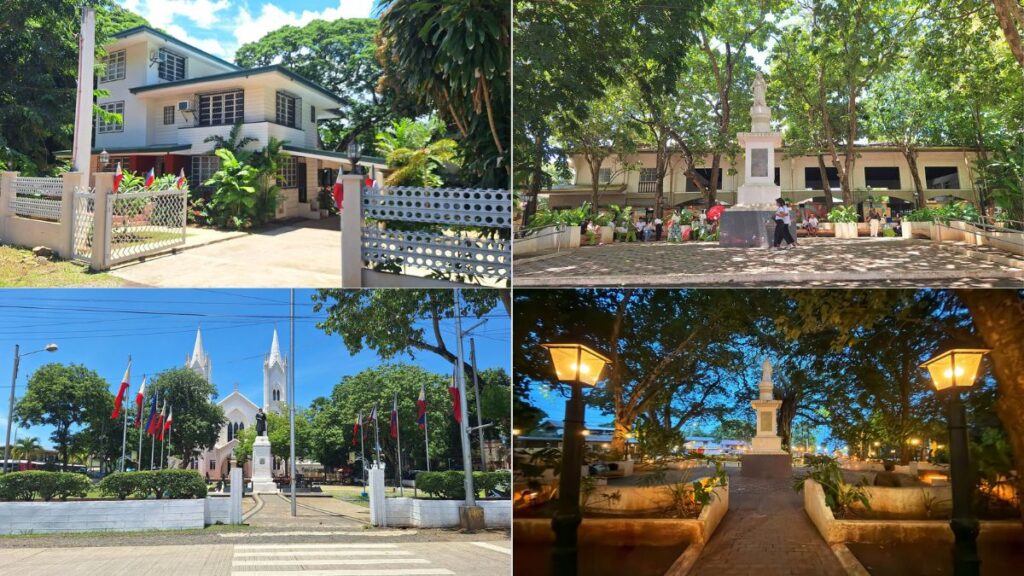
The district covers Plaza Cuartel, the Immaculate Conception Cathedral, Dr. Jose P. Rizal Park and Monument, Princess Eulalia Park, the Governor’s Residence, now called The Residence, and ancestral houses in the surrounding area.
Architectural designs were developed with USAID technical assistance, and the architectural work was led by the late heritage conservationist Toti Villalon.
Sagun said the city first restored Princess Eulalia Park before proceeding with Plaza Cuartel, while the provincial government restored the Governor’s Residence.
“First to be restored was the Princess Eulalia Park then Plaza Cuartel. The provincial government has also restored the Governor’s Residence,” she said.
Dr. Jose P. Rizal Park remains among the places being considered for improvement.
While those projects received little public opposition, the development of Plaza Cuartel drew scrutiny because of the site’s connection to the massacre and the continuing disagreement over what type of public activity should be allowed there.
Making history part of city life
The city is also preparing projects beyond physical construction.
Sagun said these include training on heritage renovation, park management and private landscaping, as well as research into old structures and the history of the district.
The research will be used for historical markers, guidebooks, brochures and materials for tourism guides.
“Since this has been designated as a heritage district, as a cultural asset hindi lang natin siya tinitingnan for protection and conservation, but at the same time, magkaroon ng economic activities through tourism,” she said.
For city officials, that means turning the district into a place where history can be studied, commemorated and included in the local economy.
For the groups opposing the amphitheater, preservation requires keeping the massacre site separate from facilities that could be associated with entertainment.
And beneath that disagreement is a second challenge: separating the history supported by archaeological evidence from the stories that have grown around Plaza Cuartel.
The investigation may have removed a tunnel from that story and identified the bones as those of animals. But the absence of those physical remains does not remove what happened there.
The question now is how Puerto Princesa will develop the site without allowing its new structures to overshadow the history they are intended to preserve. (with reports from Celeste Anna Formoso)


