


Crocodiles exist all over Palawan, including in Puerto Princesa City and the northern part of the province, but in the south, their population has reached an estimated 6,000 individuals, prompting a crocodile expert and a legislator to call for active management, policy changes, and clear rules on possible economic use as human–crocodile encounters continue.
Both 2nd District Palawan Rep. Jose Alvarez and crocodile expert Rainier Manalo of Crocodylus Porosus Philippines Inc. (CPPI) said the population has rebounded after years of protection, habitat restoration, and enforcement.
However, this recovery has also increased contact between the reptiles and people who depend on rivers and coastal areas for daily activities.
Manalo said population surveys conducted from 2015 to 2020 estimate that southern Palawan has a conservative crocodile population of about 6,000 individuals, based on a mean density of 1.76 crocodiles per kilometer across river systems where the species is present.

Of this figure, 50 percent are in Bugsuk Island, making it the single biggest cluster within Balabac.
Given that the estimate is several years old, Manalo said the actual population today could be higher.
He said this concentration is especially pronounced in mangrove-rich and low-lying coastal areas of Bataraza and Balabac, where crocodiles now overlap with fishing grounds, transport routes, and daily household activities.
“Dapat ima-manage mo na talaga siya to the level na tolerable sa community. Kahit bawasan pa natin ng malalaki, hindi mawawala ang crocodiles, kasi naka-pick up na ang population,” Manalo said.
Conflict data shows long-term trend
Records from CPPI covering 2000 to 2025 show 64 human–crocodile conflict incidents in Palawan, including 23 fatal cases and 41 non-fatal cases.
These incidents involved attacks, bites, and other serious encounters in riverine and coastal communities, many of which rely on fishing, seaweed farming, and small-scale transport.
Manalo said the data show that conflict tends to rise as crocodile populations expand into areas increasingly used by people.

He warned against downplaying the danger posed by crocodiles.
“Ang akala ng mga tao ay kumakagat lang siya, pero hindi, pumapatay talaga siya,” he said.
He added that without a clear management framework, communities often end up responding on their own, sometimes resorting to unsafe or illegal measures.
Policies lag behind science
Manalo said crocodiles in Palawan remain listed as critically endangered under national policy, a classification he said no longer reflects the current situation on the ground.
“The numbers, the distribution, the migration, hindi na talaga siya fit para sa critically endangered,” he said.
He said Republic Act No. 9147, or the Wildlife Resources Conservation and Protection Act, should be reviewed to remove crocodiles from the critically endangered category, saying the species has already recovered.
“Dapat tanggalin na siya as critically endangered species kasi ang population ay wala na sa sitwasyon na may risk na mawala. Nakabawi na eh,” he said.
While saltwater crocodiles in Palawan are already listed under Appendix II of the Convention on International Trade in Endangered Species of Wild Fauna and Flora (CITES), which allows regulated trade, Manalo said this has not translated into actual harvest or use.
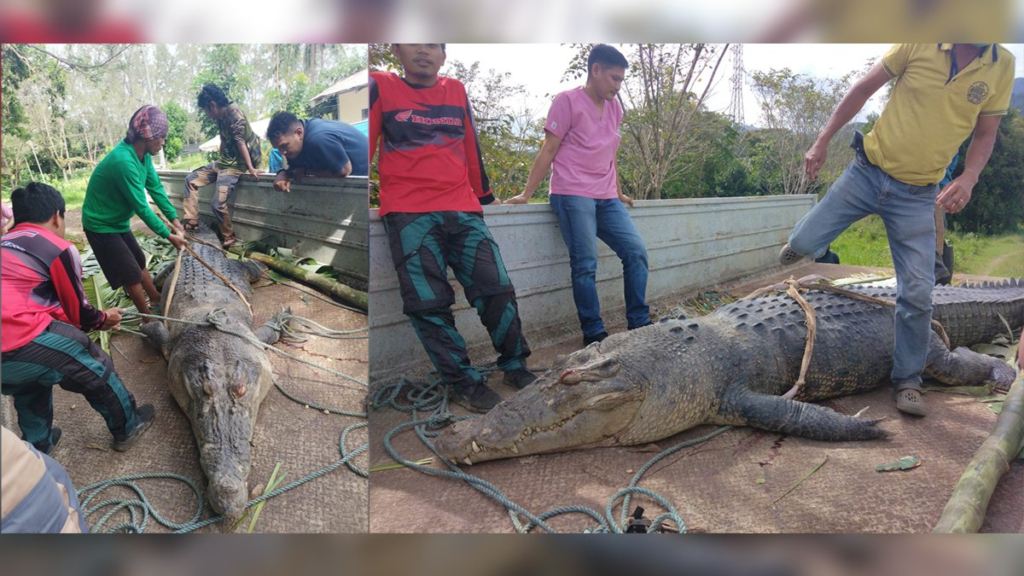
“Si Palawan ay Appendix II na, ipinanalo na natin yan noon. Pwede na siyang i-utilize ang stock ng wild for international trade,” he said.
However, he said the government has not issued harvest numbers.
“Pwede na siya pero wala pa tayong numbers to harvest. Kasi hindi makapagbigay si government eh… nilagyan natin ng precautionary measure, zero quota,” he added.
Manalo said he has been warning authorities for years that human–crocodile conflict would increase once populations recovered if no management framework was adopted.
He said revisiting existing policies would require coordination among national agencies and Palawan’s regulatory bodies, particularly the Palawan Council for Sustainable Development (PCSD) and the Department of Environment and Natural Resources (DENR).
Economic use enters public discussion
During a recent media event, Alvarez said some areas in southern Palawan now have more crocodiles than residents and suggested studying regulated economic uses instead of treating crocodiles only as a threat.
He said he has already asked PCSD Executive Director Teodoro Jose Matta to explore ways crocodiles could be turned into a source of income for local communities.
Alvarez cited tourism-oriented activities and controlled use as possible options, saying communities should benefit from living alongside a growing crocodile population rather than bearing the risks alone.
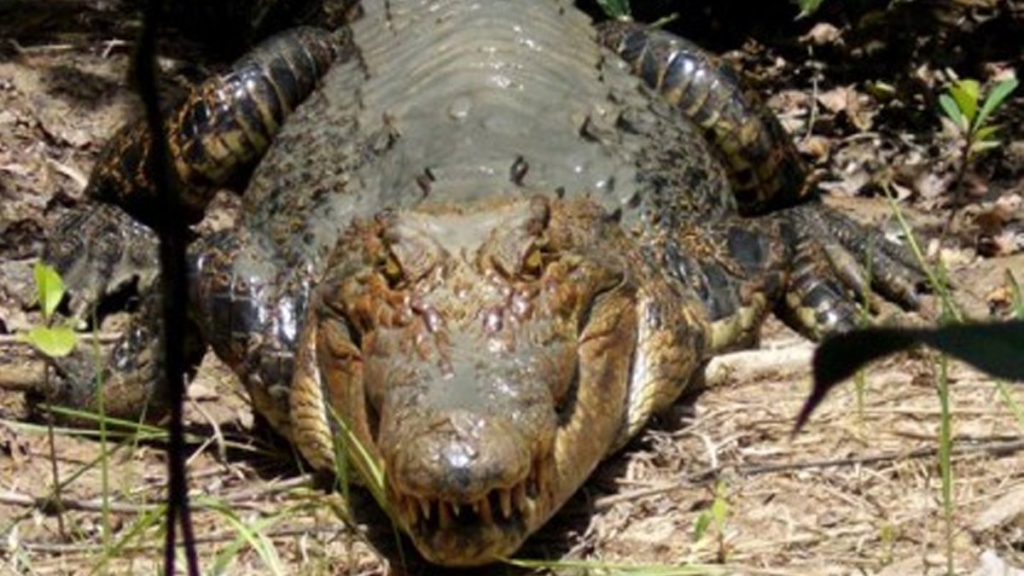
He also floated the idea of paid, controlled removal or culling, where participation would be regulated by government and fees would be collected, drawing comparisons with wildlife management practices abroad.
“Pinapa-study-han ko na ngayon sa PCSD para maging tourist destination ang Balabac ay i-cull nila yung buwaya. Halimbawa 5,000 na talaga ang actual head count, ok lang if gusto n’yong mag-hunting ng buwaya,” Alvarez said.
“Sa amin yung karne, ang balat sa iyo, pero magbayad ka. Bayad kasi maraming may gusto… magbayad sila ng $100. Sa Florida ginagawa yan. Sa Florida, the humans walk with the alligators,” he added.
Support with conditions
The idea of economic use is valid, according to Manalo. But he stressed that it must be guided by science, law, and clear limits.
“Tama naman ang kanyang perspective na kailangan na itong gamitin,” he said, referring to Alvarez’s proposal.
“Regulation ang kailangan natin… possible yan, possible,” he said.
He said policy updates must come first.
“Kaya lang meron pa tayong kailangan i-adapt na bagong policies. Like ang Republic Act 9147 natin, kailangan na natin siyang i-update kasi dito sa batas ay nasa critically endangered pa siya,” he added.
READ RELATED STORIES
When crocodiles make livelihood waters uncertain in southern Palawan
Wildlife authorities to probe unauthorized capture of 14.7-foot crocodile in Bataraza
Markting potential, policy limits
Crocodiles in Palawan already have market value, particularly for leather, which he described as high quality. However, actual marketing remains limited by policy and implementation gaps rather than lack of demand.
He elaborated that demand exists in international markets in Europe and parts of Asia, and that buyer inquiries have gradually returned after the pandemic. However, without approved harvest numbers and clear implementing rules, crocodiles taken from the wild cannot legally enter these markets.

He said domestic use is also restricted, with crocodile meat allowed only under regulated conditions and subject to sanitation and handling requirements.
Manalo laid out that marketing should only proceed under a regulated, community-based system, with trained local residents involved and government oversight in place to ensure sustainability.
“Matagal na namin sinasabi ito sa LGU ng Balabac at sa iba pang ahensya ng gobyerno,” he said.
Management, not indiscriminate killing
The CPPI crocodile expert warned that indiscriminate killing, which could happen given the situation in areas such as Balabac and Bataraza, would not solve the problem and could undermine years of conservation gains.
Removing a small number of crocodiles, he said, has little effect on large, established populations and risks repeating mistakes made when the species was still recovering.
Any management program should involve trained communities, clear rules, monitoring, and updated policies that define how crocodiles can be used, if at all.
“Resource yan eh. Kailangan ma-utilize, pero dapat sustainable,” Manalo said.
Both Manalo and Alvarez said the situation in southern Palawan highlights the need for coordinated action among regulators, scientists, and local governments to balance public safety, conservation, and possible economic benefits, warning that without clear policy direction, human–crocodile conflict is likely to continue.


