


The late afternoon crowd moves slowly along the Puerto Princesa Baywalk, passing food spots, hawker stalls, and groups waiting for the breeze to pick up. Near the center of the strip is Dahon at Dagat, a Modern Filipino Cuisine restaurant known for carrying the weight of memory.
From the open kitchen, the aroma of garlic and simmering broth drifts into the dining area, warm and insistent, curling into your chest the way old stories wind into memory. This is where Rix Rafols holds the food of his childhood.
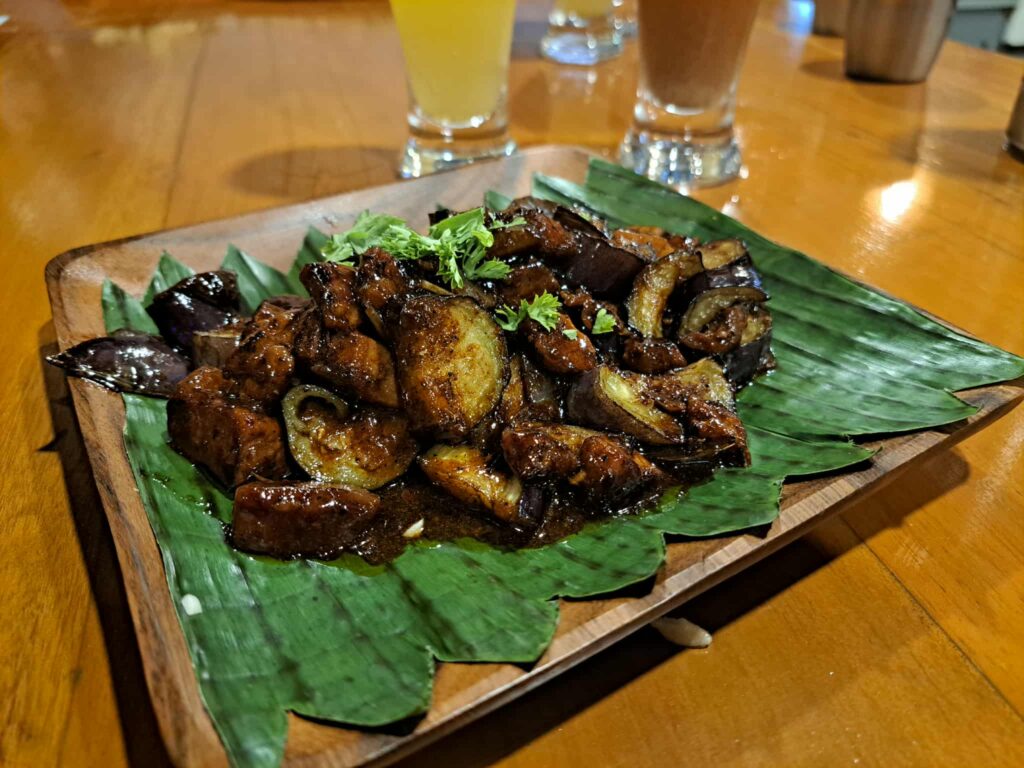
Adobo a la Veroning sits at the center of the menu, a homage to Rix’s grandmother, whose hands measured flavors by memory, whose instinct guided every stir, and whose cooking felt like a story in every bite.
The pork is soft from the pot. Eggplant takes the color of the sauce. The quiet acidity from tomatoes melts into the broth until the liquid turns dark and thick. The sauce clings. It is reduced to the point of intention, a decision made the way elders make decisions at the stove, sure of what tastes right.
“Yung inspiration has always been yung luto ng lola ko,” he shared. “So, it’s adobo with a little bit of tomato sauce,” he described.
A small addition, a small rebellion—because he says every family has its own adobo, but this one is his.
The dish tastes like someone watching over you. Filipino in the way only home can be.

The sea enters the kitchen, too. He talks about representing what is abundant, what has always been here. Tuna, shrimp, pusit. Ingredients that taste of where Palawan sits on the map. The sea also finds its way onto the table. Seafood Binakol comes in a fragrant coconut broth, brimming with shrimp, tahong, and squid, each bite a reflection of Palawan’s abundance.
“We wanted to represent yung dagat, yung ating good marine life,” he explains. The broth tastes like the ocean softened by coconut juice, the kind of soup that feels like stepping into saltwater on a hot day. He says the dish is among his favorites. Coconut and the sea, he notes, are everywhere here.
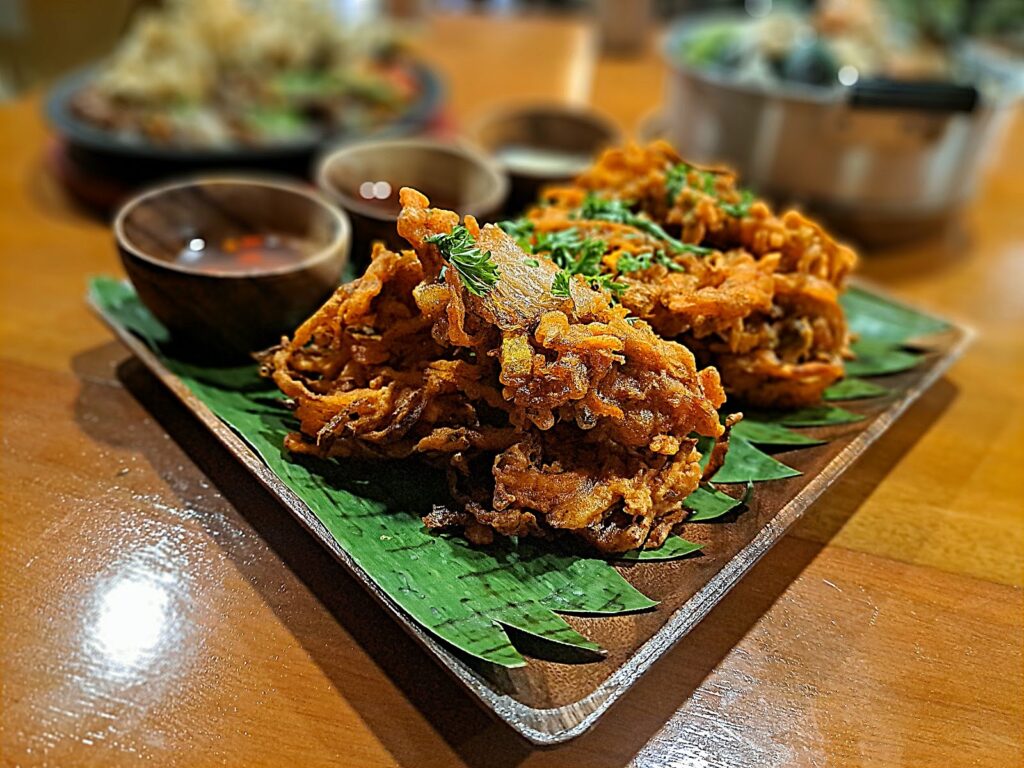
Other dishes play with familiarity and surprise. Kimchi Okoy, crisp at the edges with a gentle heat, is perfect with their house-made vinegar. Sizzling Beef Sinigang turns the familiar sour stew into something tender, rich, and smoky, topped with vegetable tempura that crackles with every bite. Pasta Negra and Calamares Negra, ink-dark and brimming with umami, show Rix’s willingness to experiment while staying rooted in Filipino flavors.

Vegetables are given equal weight. Grilled pakbet and laing appear alongside seafood and pork, honoring land and sea in equal measure. Each plate reads like a note on what Filipino food can be when memory is given room to play.
Even the drinks and endings have their place in the arc of the meal. The dalandan fizz cuts through the richness, a sweet and tangy reminder to breathe between spoonfuls.
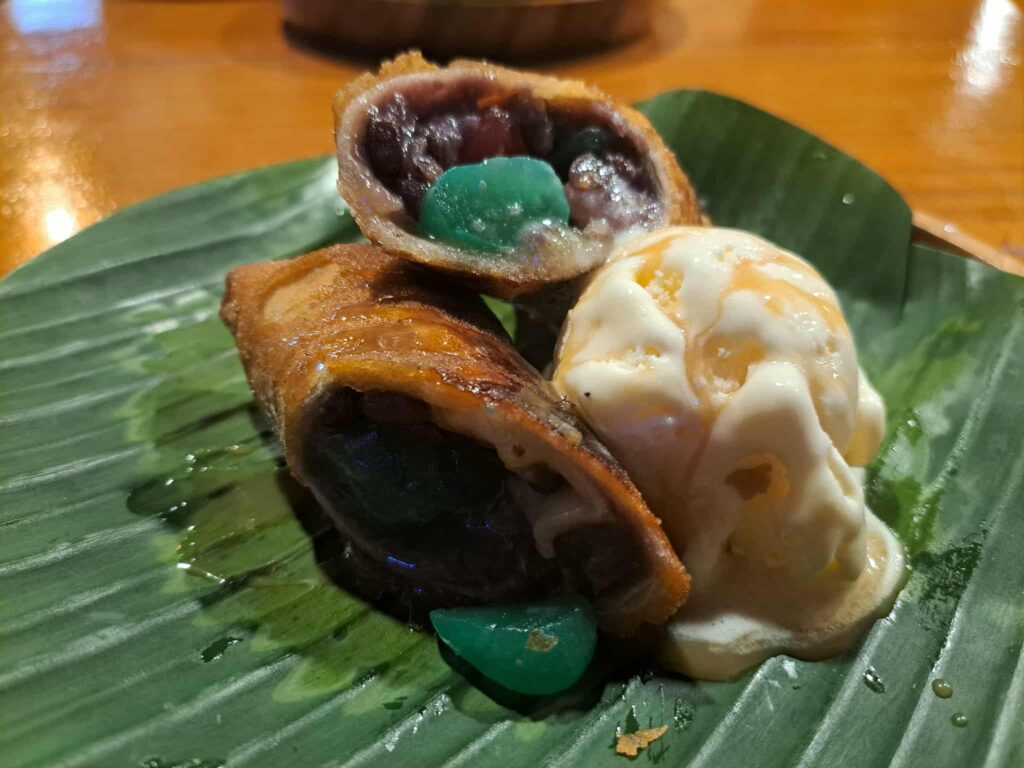
The Turon con Halo-Halo lands like the last light of day, warm and certain. The tiramisu is decadent in quiet ways, the ladyfingers baked in-house, soft as soaked stories.
He says much of the menu is built on what is found nearby. “Talagang we try to make everything local. Para rin sustainable,” he said.
Each ingredient, each dish, carries a sense of place: Palawan, and the kitchens and markets where its flavors are born.
The insistence on local tastes is less like advocacy and more like habit—an understanding that food should not travel far to feel like it belongs. He says Filipinos will understand the dishes. “Mahilig tayo mag-experiment,” he said.
He mentions chao long, how the city took something foreign and claimed it. He believes these flavors will meet the same fate. Across the Baywalk, the sky changes. People gather. Boats drift close enough that their lights scatter on the water. From inside Dahon at Dagat, the view is open, the food warm, and the stories familiar.
From the center of the Baywalk, Dahon at Dagat offers more than food—it offers memory. Each dish is a story: a grandmother’s hand, the sea at the doorstep, the market stalls and farms nearby. “Share the food, enjoy the view, and create unforgettable memories,” he says, inviting diners to sit, taste, and linger.
Even as the sun sets over Puerto Princesa Bay, the Adobo a la Veroning continues to simmer quietly in the kitchen, the way old recipes do—carrying warmth, history, and a reminder that home is often just a plate away.


